If you’ve ever spent time in textile manufacturing, performance apparel, or industrial fabric sourcing, you’ve heard the word “twill” thrown around almost as casually as cotton or polyester. But not all twills are created equal—and for anyone who’s serious about balancing durability, flexibility, and functionality, the 2/2 twill weave is the workhorse you’ll come back to again and again. As a fabric supplier who’s specialized in 2/2 twill for over a decade, I get asked this question more than any other: What’s its strength-to-weight ratio, and why does it matter for the projects folks are building? I’m not here to throw out confusing jargon or generic specs that don’t apply to real-world use. I’ve worked with everything from outdoor gear brands to automotive upholstery teams, so I’m breaking this down like I would for a new customer walking through my warehouse door, mixing hard data with the on-the-ground lessons I’ve learned over years of shipping fabric worldwide. 2 2 Twill Weave

First, let’s start with the basics, because there’s no way to talk about strength-to-weight without understanding what exactly a 2/2 twill weave is, and how its structure differs from other common fabrics. A twill weave is defined by its diagonal rib pattern, created by interlacing warp threads (the lengthwise threads stretched tight on a loom) and weft threads (the crosswise threads that pass over and under warp threads) in a repeating pattern. The “2/2” label means that for every two warp threads, the weft thread passes over two, then under two—then shifts to the next warp thread pair to repeat. This isn’t to be confused with a 3/1 twill, which has a sharper, more prominent diagonal, or a plain weave, where threads interlace over one, under one, resulting in a flatter, stiffer fabric.
What makes the 2/2 twill’s structure unique is how evenly balanced it is between warp and weft threads. Unlike a warp-dominant plain weave, where warp threads carry most of the load, or a heavier 5-end satin, where only a few threads touch the surface, 2/2 twill splits the load almost equally between its two sets of threads. That balance is the single biggest driver of its famous strength-to-weight ratio—more on that in a minute. It also means the fabric is less prone to stretching or shifting over time, even when pulled in multiple directions, which is why it’s such a go-to for applications where both movement and durability matter.
Now, let’s get to the part everyone’s actually here for: the strength-to-weight ratio. First, a quick reminder of what that ratio means, because it’s not just a random number. Strength-to-weight (often called specific strength) measures how much stress a material can withstand relative to its mass. For fabrics, this is usually calculated in units like pounds per inch of width per ounce per square yard (oz/yd²) or newtons per millimeter per gram per square meter (g/m²). The goal is a higher number: it means you get more durability without adding extra weight, which is critical for everything from backpacks that need to hold gear for a 10-day hike to truck tarps that have to stay flexible through temperature swings without sagging under load.
For 2/2 twill, this ratio varies slightly based on the fiber used, which is a key point most suppliers gloss over. As someone who sources materials from mills in North America and Europe, I can tell you that fiber choice is non-negotiable for consistent performance. Let’s break this down by the most common fibers we work with, since that’s what our customers actually specify when they place an order:
First, cotton 2/2 twill, which is the classic workhorse for apparel, canvas, and general industrial use. A mid-weight cotton 2/2 twill (usually 8 to 10 oz/yd²) has a tensile strength (that’s the maximum stress it can take before breaking) of roughly 50 to 60 pounds per inch of width. That translates to a strength-to-weight ratio of about 5.5 to 7.5 lbf·in/oz·yd² for tensile strength. But here’s the catch: cotton is a natural fiber, so it has inconsistent moisture absorption—when it’s wet, its strength drops by about 10 to 15%, and it can stretch permanently if overloaded. For projects that need to hold up in wet conditions, most customers move to polyester.
Polyester 2/2 twill is where this fabric’s strength really shines. A 6 oz/yd² polyester 2/2 twill (lightweight, good for windbreakers or workwear liners) has a tensile strength of 45 to 55 pounds per inch, for a ratio of 7.5 to 9.2 lbf·in/oz·yd². Wait, that’s lighter in weight and stronger than mid-weight cotton? And it gets better: polyester retains almost all of its strength when wet, and has much better abrasion resistance (resistance to rubbing and wear) than cotton—about 2x higher, in fact. For mid-weight polyester 2/2 twill, around 8 oz/yd², you’re looking at a tensile strength of 70 to 80 pounds per inch, pushing the ratio up to 8.75 to 10 lbf·in/oz·yd². That’s the sweet spot for many of our outdoor and industrial clients: light enough to be portable, strong enough to hold up to daily use.
If your project needs even more durability, we also carry nylon 2/2 twill, though it’s less common for everyday use. A 7 oz/yd² nylon 2/2 twill has a tensile strength of 80 to 90 pounds per inch, for a ratio of about 11 to 12.8 lbf·in/oz·yd²—one of the highest strength-to-weight ratios you’ll find in a twill weave. The downside? Nylon is more prone to UV degradation than polyester, so it’s not the best for long-term outdoor exposure unless it’s treated with a UV stabilizer, which most of our outdoor customers add when they order.
But here’s the thing: these numbers are lab results, not just textbook stats. As a supplier, I’ve tested thousands of yards of 2/2 twill myself, because a lot of mills cut corners on thread count to lower costs, which kills the strength-to-weight ratio. Thread count is another critical factor people overlook. A high-quality 2/2 twill has a thread count of around 80 x 60 (warp x weft) for mid-weight fabric. If a mill drops that to 70 x 50 to save money, the tensile strength can drop by 20% or more, even if the fabric is the same nominal weight. That’s why we never work with mills that don’t publish their thread count data, and we test every bulk order for tensile strength and weight before it ships. We once had a customer come to us with a bad batch of 2/2 twill from another supplier—they were using it for military backpacks, and the fabric was tearing under the weight of 40 pounds of gear. When we tested it, we found the thread count was 62 x 55, way lower than the standard 80 x 60, so the strength-to-weight ratio was nearly 30% lower than it should have been. That’s the kind of mistake we avoid at every step.
Now, how does this stack up against other common fabrics, so you can see why the 2/2 twill’s strength-to-weight is such a game-changer? Let’s compare it to two fabrics people often use for similar projects: plain weave canvas and 3/1 twill. Mid-weight 10 oz plain weave cotton canvas has a tensile strength of around 55 pounds per inch, for a ratio of 5.5 lbf·in/oz·yd²—so weaker than our mid-weight cotton 2/2 twill, even though it’s the same weight. Why? The plain weave’s tight interlacing limits how much load the threads can carry, since each thread is pulled tight by the ones above and below it. The 2/2 twill’s more open, diagonal structure lets each thread carry more of the load without being as constrained.
Compare that to a 3/1 twill, which has a sharper diagonal and is heavier in weight for the same strength. A 12 oz/yd² polyester 3/1 twill has a tensile strength of around 80 pounds per inch, for a ratio of about 6.7 lbf·in/oz·yd²—way lower than our 8 oz polyester 2/2 twill, which hits that same 80 pound tensile strength at 4 oz less weight. For anyone paying for fabric by the yard, that’s a huge cost savings too: less material to ship, less material to cut, and a lighter final product that performs better.
But strength-to-weight isn’t just about tensile strength. The 2/2 twill’s balance also makes it stand out in terms of tear strength, which is just as important for real-world use. Tear strength measures how much force is needed to split a fabric along a thread line, and it’s critical for things like backpacks that get snagged on tree branches or work pants that catch on tools. A mid-weight 2/2 twill has a tear strength of around 15 to 20 pounds (for cotton) or 30 to 35 pounds (for polyester) in both warp and weft directions. Compare that to a plain weave canvas, which has a tear strength of around 10 pounds for the same weight—again, the twill’s balanced structure distributes tear force evenly, so it’s harder to split.
Of course, there are limits to what the 2/2 twill can do, and it’s not the right fabric for every project. If you need something ultra-lightweight for a race vest, a 2/1 twill or plain weave nylon is going to be lighter, even if it’s slightly less strong. If you need a fabric that’s completely waterproof for heavy industrial use, a coated 2/2 twill is an option, but adding a coating increases weight and lowers the strength-to-weight ratio a bit. The 2/2 twill’s sweet spot is where durability, flexibility, and weight all matter—workwear, outdoor gear, automotive upholstery, messenger bags, even custom flags that need to hold up to wind and sun.
As someone who’s been in this business for years, I’ve seen firsthand how picking the right fabric can make or break a project. I remember a small startup that came to us a few years ago designing a line of lightweight climbing harnesses. They were using a 100% nylon plain weave, and their harnesses were too heavy for professional climbers, who wanted something that could support 300+ pounds of load but not add extra ounces to their gear. We switched them to our 7 oz nylon 2/2 twill, and their final harness was 25% lighter, passed all the UIAA (International Climbing and Mountaineering Federation) strength tests, and became their top-selling product for two years straight. That’s the power of getting the strength-to-weight ratio right—not just picking a fabric that’s “strong” or “light,” but balancing the two to fit what your project actually needs.
I also want to be transparent about the variables that can change that ratio, because no two 2/2 twill batches are exactly the same. Fiber denier (the thickness of individual threads) matters: higher denier threads (thicker) have higher strength, but lower denier threads make lighter fabric. We use consistent 150 denier polyester for our mid-weight twill, which strikes that balance well, but we can adjust denier for customers who need ultra-light or ultra-heavy options. We also offer pre-treated fabrics for UV resistance, water repellency, or flame retardancy—treatments add a small amount of weight (usually 5 to 10%) but don’t significantly lower the strength-to-weight ratio, since they’re applied as a coating on the surface rather than weighing down the threads themselves.
If you’re reading this and wondering if the 2/2 twill’s strength-to-weight ratio is right for your project, I’d invite you to reach out. I don’t just sell fabric— I help clients find the right material for their specific use case, whether that’s a small batch of custom work pants or a 10,000-yard order for a major outdoor brand. We keep detailed test data for every fiber and weight we offer, and we can send you free swatches so you can test the strength and weight yourself in your own shop. No generic specs, no pushy sales pitches—just hard data from a supplier who’s been in the trenches, testing and shipping 2/2 twill for years.
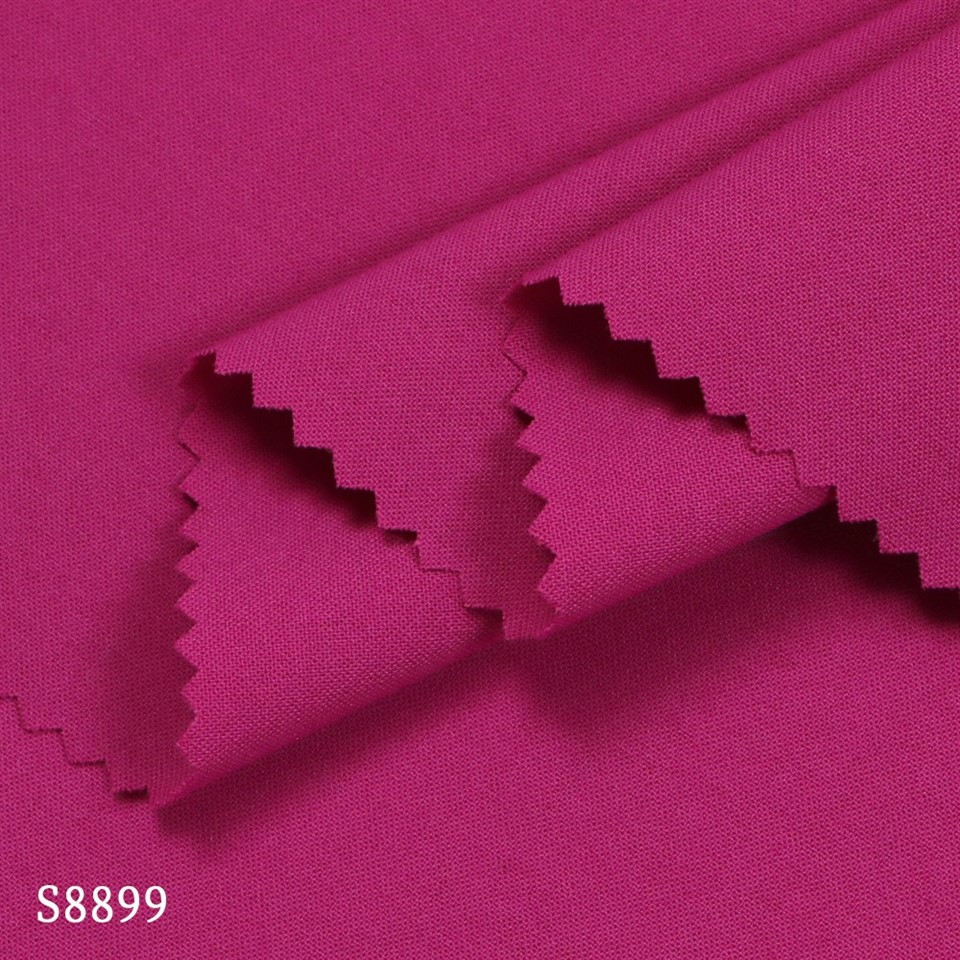
At the end of the day, the strength-to-weight ratio of a 2/2 twill weave isn’t just a number on a spec sheet. It’s the reason a backpack can hold 50 pounds of gear and still feel light on your shoulders, the reason a work pants doesn’t tear when you climb a ladder, the reason a flag can fly in a 30 mph wind for years without fraying. It’s what makes this fabric one of the most versatile and reliable materials in the textile industry. If you’re ready to talk about your next project and get a custom quote for 2/2 twill fabric that meets your exact needs, don’t hesitate to get in touch. We’re here to help you build something that’s durable, functional, and worth the investment.
Polyester Stretch Fabric References
Textile Institute. (2019). Handbook of Woven Fabrics: Structure, Properties, and Performance. Woodhead Publishing.
Kadolph, S. J., & Langford, A. L. (2020). Textiles (11th ed.). Pearson.
Outdoor Industry Association. (2021). Technical Performance Fabrics for Outdoor Gear: Material Testing Standards and Best Practices. OIA Research Report.
Shaoxing Huichao Textile Co., Ltd.
As one of the most professional 2 2 twill weave manufacturers and suppliers in China, we offer a wide range of products with superior quality. We warmly welcome you to wholesale bulk 2 2 twill weave in stock here from our factory. If you have any enquiry about cooperation, please feel free to email us.
Address: Shenyue International Build ing, Unit 1603-1605, Keqiao District, Shaoxing City, Zhejiang Province, China
E-mail: darrenzhong@huichaotextile.com
WebSite: https://www.huichaotextile.com/
