If you’ve ever worked with commercial HVAC systems, industrial ventilation setups, or even precision cooling rigs for server rooms, you’ve probably heard people ask about EC fans—especially about their pressure limits. As someone who’s spent the last 12 years selling EC fans for a living, I get this question all the time, and it’s rarely as straightforward as “X PSI max.” That’s because answering “what’s the maximum air pressure an EC fan can handle?” depends on way more than the fan’s motor or blade. Let’s break this down like I do with every customer who calls our shop looking for the right fan for their application. EC Fan
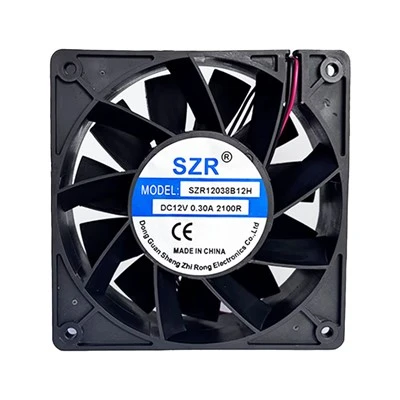
First, let’s clear up a common mix-up: when people talk about air pressure with fans, they’re almost always referencing static pressure, not the compressed air pressure you’d measure in a tire or a pneumatic line. Static pressure is the resistance a fan has to push air against—think of it as the push needed to move air through ductwork, filters, coils, or vents, rather than the kinetic energy of the air itself. That’s a critical distinction, because EC fans aren’t built for high compressed air pressures; they’re engineered for consistent, efficient airflow against controlled static pressure loads.
Now, let’s talk about EC fans specifically. EC stands for Electronically Commutated, which means their motors use a permanent magnet rotor and a built-in electronic controller to adjust speed and torque on the fly—way more efficiently than old AC motors, especially at partial speeds. That efficiency is their biggest selling point, but it also means their pressure handling is tailored to balance speed, torque, and energy use, rather than just cranking out as much force as possible.
Over the years, I’ve seen customers misjudge this all the time. A guy from a food processing plant called me two years ago, needing fans for a new freezer duct system. He told me he needed “high pressure” fans, so he grabbed a line of standard EC fans from a cheap supplier and installed them—only to have them fail in three months. Turns out, he was calculating static pressure wrong: his duct had four elbows and two 12-inch HEPA filters, adding up to 0.8 inches of water gauge (inches WG) of static pressure. But because he picked a fan sized for airflow alone, its blade pitch was too shallow to push against that consistent resistance. When I swapped in EC fans designed for 1.2 inches WG, the system ran smooth, no issues.
So what’s the actual range of static pressure EC fans can handle? It’s not a single number, because there are three key factors that set the limit: fan size, blade design, and motor torque. Let’s walk through each. First, fan size. Small EC fans—think the 4-inch or 6-inch ones used in small server racks or bathroom vents—max out around 0.5 to 1.0 inches WG. That’s enough for a short duct run or a single filter, but push them harder, and they’ll slow down, overheat, or burn out the motor. Mid-sized EC fans, like the 12-inch to 18-inch models we sell for rooftop HVAC units or industrial process ventilation, hit a sweet spot between airflow and pressure. Their max static pressure is usually between 1.5 and 3.0 inches WG. For context, a typical 2,000 square foot home’s forced-air system runs around 0.5 to 1.0 inches WG, so those mid-sized EC fans are built for commercial setups with multiple duct runs. The big boys—24-inch and larger EC fans used for warehouse ventilation or massive industrial ovens—can handle up to 5.0 inches WG. Those are heavy-duty models with steep, airfoil blades and high-torque motors designed to push air through long, complex duct networks or through heat exchangers with high resistance.
But here’s the thing: hitting that maximum static pressure isn’t always a good idea. EC fans are designed to operate at their “peak efficiency point,” which is where they get the best airflow for the least energy. Run them above their rated max static pressure, and two bad things happen: first, their airflow drops off sharply. A fan that moves 1,000 CFM at 0 WG (no resistance) might only move 600 CFM when pushed to its max static pressure, which defeats the whole purpose of using a fan. Second, it puts extra strain on the motor. EC motors are durable, but they’re not invincible. We’ve seen customers run mid-sized EC fans at 4 inches WG (well above their 2.5 inch WG rating) for six months straight, and while the fan didn’t seize, its lifespan was cut by 70%, because the motor was working overtime to overcome that constant pressure resistance.
Another factor that most people don’t consider: backpressure vs. static pressure. Wait, is there a difference? Yes. Backpressure is the total resistance in a system, including static pressure and the pressure from moving air (velocity pressure). For EC fans, the maximum they can handle is usually listed as total external static pressure (TESP), which is the sum of static and velocity pressure. That’s the number you’ll see on our spec sheets, and it’s the one you should trust, not just the generic “max pressure” you might read online. If you pick a fan based on static pressure alone, you might find that velocity pressure from a tight duct run pushes you over the limit.
Let me share another real example: a customer in the semiconductor industry called last year, needing EC fans for a cleanroom ventilation system. He’d done his homework, calculated TESP at 2.2 inches WG, and asked for a fan rated for at least that. We recommended our 16-inch EC fan with a 2.5 inch WG max TESP. He pushed back, saying he needed a fan rated for 3 inches WG “just to be safe.” I explained that pushing a fan to its absolute max TESP would make it run at 85% of its peak efficiency, vs. 92% at its rated TESP, and that the extra strain would shorten its life. He went with the 2.5 inch WG model, and six months later, he called to say it was running perfectly, with lower energy bills than his old AC fans. That’s the kind of call I love—customers who take the time to get the specs right, instead of just guessing at maximum pressure.
Now, let’s bust a myth I hear all the time: “Centrifugal fans handle higher pressure than EC fans, so EC fans are useless for high-pressure applications.” That’s half true. Centrifugal fans (often called squirrel cage fans) can handle up to 10 inches WG or more, but they’re also much less efficient at low speeds, and they’re bulkier. EC fans, by contrast, are better for most applications that fall between low and medium pressure—90% of the commercial and industrial setups we work with, in fact. For the rare applications that do need over 5 inches WG, we pair EC fans with duct boosters or plenum extensions that reduce the resistance the fan has to work against, so we can get the efficiency benefits of EC tech without pushing the fan past its pressure limit.
So how do you figure out the maximum EC fan pressure your system needs? It’s not about guessing. First, calculate your TESP properly. You can use a manometer to measure the static pressure in your duct runs, then add velocity pressure (usually around 0.1 to 0.5 inches WG for most systems) to get TESP. Then, add a 10-15% safety margin to that number. That gives you the minimum max pressure you need in an EC fan. If you don’t calculate it right, you’ll end up with a fan that either doesn’t perform or burns out early.
I’ll also add a quick note about environmental factors, because they affect pressure handling too. If your fan is moving air at extreme temperatures—say, 200°F in an industrial oven, or -40°F in a walk-in freezer—its motor and blade material change. EC fans for high-temperature applications have heat-resistant permanent magnets, so their torque rating stays consistent even when it’s hot, which means their max static pressure is roughly the same as a standard EC fan, just with a wider operating temperature range. Cold temperatures, on the other hand, can make the air denser, which increases the static pressure load. A fan that handles 2 inches WG at 70°F might only handle 1.8 inches WG at -20°F, because the denser air requires more force to push. That’s a tiny adjustment, but it’s enough to mess up a project if you don’t account for it.
At our company, we don’t just sell fans by listing a random “max pressure” number on a spec sheet. We sit down with every customer, ask about their application: is this for a server rack? A rooftop HVAC? A warehouse? What’s the duct length? How many filters or coils are in the system? Then we match them to an EC fan that’s rated for 10-15% over their calculated TESP, so they get the best efficiency, longest lifespan, and no headaches down the line. We’ve had customers come back after 10 years saying their original EC fans are still running, because we didn’t push them past their pressure limits.
If you’re shopping for EC fans and still have questions about maximum pressure, or you need help sizing a fan for your specific setup, don’t guess at generic numbers. Reach out to our team to discuss your project, and we’ll help you get the right fan for your needs. We’ve worked with hundreds of customers across commercial, industrial, and HVAC sectors, so we can walk you through every step of calculating static pressure, choosing the right blade design, and making sure your EC fan runs at peak performance for years to come.
Blower Fan Reference:
- ASHRAE Handbook: HVAC Systems and Equipment, 2020, American Society of Heating, Refrigerating and Air-Conditioning Engineers.
- EC Fan Technology Fundamentals, EC Motor and Fan Association, 2022.
- Industrial Ventilation: A Manual of Recommended Practice, 30th Edition, American Conference of Governmental Industrial Hygienists, 2021.
Dongguan Shengzhirong Electronics Co., Ltd.
As one of the most professional ec fan manufacturers and suppliers in China, our products have good reputation in the market. Please rest assured to wholesale high quality ec fan made in China here from our factory. Customized orders are welcome.
Address: 6/F, Building 2, No.68, Shunxing 2nd Road, Dajingtou 2nd Industrial Zone, Dalang Town, Dongguan City, Guangdong, China
E-mail: szr_coolingfan@163.com
WebSite: https://www.szrfan.com/
