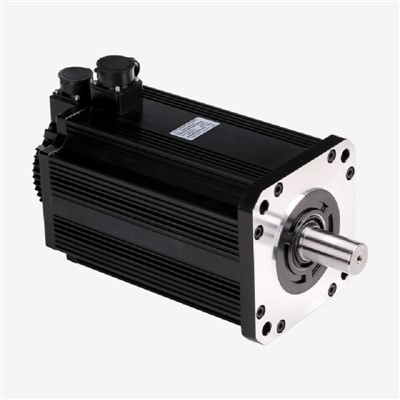
Hey there, if you’ve ever stared at an AC gear motor humming along, only to realize it’s turning the exact wrong way for your project, you’re not alone. I’m part of the AC gear motor supply team, and this is one of the most common questions we get—from small shop owners building custom conveyor belts to warehouse managers tweaking their sorting lines. The good news? For most standard AC gear motors, reversing the rotation isn’t some super complicated fix. It’s actually pretty straightforward, as long as you know what you’re working with. Let’s break this down, no fancy jargon, just real, actionable stuff we’ve seen work hundreds of times. First off, a quick reality check: this only applies to single-phase or three-phase AC induction gear motors, which are the ones we sell every day. Brush-type AC motors? Not so much—those usually need new windings, and you don’t wanna mess with that (we’ve seen too many people fry them trying). AC Gear Motor
Let’s start with the basics so you don’t waste time guessing. Most AC gear motors run off two types of power: single-phase (like what you have in your garage or home workshop) and three-phase (common in factories or bigger commercial setups). The fix for each is totally different, so skip ahead to the section that matches your motor.
First, three-phase motors. These are the workhorses—think big conveyor systems, packaging machines, that kind of thing. The cool thing about three-phase is their rotation direction is determined by the order of the power wires. If it’s turning backward, all you gotta do is swap two of the three line wires. Wait, but hold up—before you do anything, kill the power. I mean, unplug it or flip the breaker. A lot of people skip this and get zapped, and that’s the last thing anyone wants. Once power is totally off, locate the motor’s terminal box—it’s that little metal cover on the side, usually with a diagram sticker on it. If you can’t find the diagram, don’t panic. It’ll have three terminals, labeled L1, L2, L3 or sometimes T1, T2, T3. Grab a small screwdriver, pop off the cover, and write down which wire is where before you touch anything. Then, just swap two of the three wires. That’s it. Turn the power back on, and boom—rotation reversed. We’ve tested this on every three-phase gear motor we stock, and it works 9 times out of 10. The only caveat? If your motor is connected to a variable frequency drive (VFD), like a lot of newer systems are, you might not need to mess with the terminal box at all. Most VFDs have a simple “reverse” setting in the control menu. If you’re using a VFD, check the drive’s manual, or if you’re not sure, shoot us a message. We can walk you through it.
Now, single-phase motors. These are the ones for smaller jobs—like a garage door opener, a small fan, or a compact conveyor. Single-phase has two windings: the main winding and the auxiliary (or start) winding. The rotation direction here depends on which winding gets the power first. So, to reverse it, you just swap the start winding and main winding connections. Again, power off first—seriously, don’t skip this. Find the terminal box on your single-phase gear motor. You’ll see four wires usually: two for line power, and two for the start winding (they might be labeled “RUN” and “START” on the diagram). Write down where everything is. Then, swap the two start wires with the two run wires. Wait, hold on—some people think that’s all, but there’s a small catch with capacitor-start single-phase motors. If your motor has a big capacitor (the silver or metal cylinder near the terminal box), make sure you don’t discharge it with a screwdriver. Just swap the start winding leads, and you’re good. We’ve had customers with small packaging machines do this in 5 minutes, no tools other than a screwdriver.
But wait, not all AC gear motors are the same. There’s another type called shaded-pole motors, used for super small, low-torque stuff—like a tiny fan in a HVAC unit or a display case motor. Those? You can’t reverse the rotation at all. The design is built for one direction, and messing with it will just make it not run at all, or burn out. So if you’ve got a tiny shaded-pole motor, don’t waste your time trying to reverse it. If you need rotation in the other direction, you’ll just have to get a motor designed for that. We sell those too, just so you know.
Now, a few pro tips from our team—stuff we’ve learned from fixing customer mistakes, not just reading manuals. First, always label everything. I can’t tell you how many times a customer has swapped wires, got the direction wrong, and then couldn’t remember which wire was which to fix it. Take a photo of the terminal box with your phone before you touch anything. That’s a lifesaver. Second, check the load. If your motor is driving something heavy, like a conveyor full of boxes, reverse the rotation slowly. Wait 10 seconds after you flip the switch before it starts spinning all the way. That prevents a surge, which can damage the gears inside the gear motor. Third, if you’re unsure, don’t guess. We’ve had customers who tried to reverse a motor without checking the type, and ended up with a fried start winding. If you send us a photo of the motor’s terminal diagram or the model number, we can tell you exactly how to do it for free. No sales pitch, just helping.
Also, let’s talk about when you shouldn’t reverse it. If your motor has a built-in brake, a gear reduction unit that only works one way, or a thermal overload protector tied to rotation direction—don’t do it. Those parts are designed for one direction, and reversing will break them. For example, a motor with a backstop clutch (used to keep a conveyor from rolling backward) can’t be reversed without replacing the clutch. If you’ve got any of those features, you’ll need a motor that’s pre-wired for reverse direction. That’s something we stock a lot too, so just ask.
Wait, what about if it’s not a standard motor? Like a custom gear motor for a special application? No problem. A lot of our custom orders have reversible rotors, but you have to tell us upfront if you need that. If you already have a custom motor and it’s not reversing, shoot us the specs, and we can guide you. We work with all kinds—from 1/10 HP to 100 HP, for all sorts of industries.
Let me recap this real quick, so you don’t have to scroll back. For three-phase AC gear motors: power off, swap two line wires, power on. For single-phase: power off, swap start and run winding wires. For shaded-pole: can’t reverse, get a new motor. For VFD-connected motors: just use the VFD’s reverse setting. That’s it. It’s not rocket science.
Now, if you’re reading this because your current motor isn’t reversing, and you don’t wanna mess with the wiring? That’s fine too. We stock a huge range of pre-reversed AC gear motors, so you can just swap it out. No hassle, no wiring, no mistakes. A lot of our customers prefer that for big jobs where downtime costs money. If you need a replacement, just let us know what HP, torque, and rotation you need, and we’ll hook you up.
Before I wrap this up, a quick note on safety: always disconnect power before working on any electrical equipment. Even if the motor is off, there might be residual charge in the capacitor, so discharge it with a insulated screwdriver (or just leave it alone, as long as you’re not touching the wires). And if you get a shock, don’t ignore it—even a small one can be a sign that something’s wrong with the wiring.
At the end of the day, reversing an AC gear motor is usually super simple, as long as you know what type you’re dealing with. If you try to swap wires and it doesn’t work, don’t keep messing with it. That’s when it’s time to reach out. We’re here to help—whether you need step-by-step instructions, a replacement motor, or just someone to answer a quick question. We’ve been in this game long enough to know that no two jobs are exactly the same, and we don’t believe in one-size-fits-all solutions.
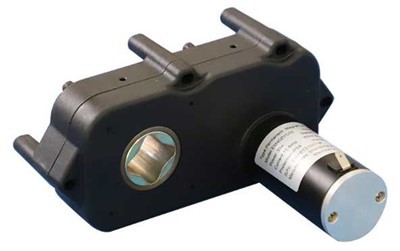
So if you’ve got a motor that needs rotation reversed, or you’re shopping for a new AC gear motor for a project, hit us up. We’ll make sure you get exactly what you need, no fluff, no extra charges. Thanks for reading, and happy motoring.
DC Motor References
- Fitzgerald, A. E., Kingsley, C., Jr., & Umans, S. D. Electric Machinery. McGraw-Hill Education, 2003.
- Hameyer, K. Electrical Machines, Drives and Transformers. Springer, 2017.
- NEC Handbook: National Electrical Code. National Fire Protection Association, 2020.
Zibo Auric Mechanical and Electrical Technology Co., Ltd.
As one of the leading ac gear motor manufacturers and suppliers in China, we warmly welcome you to buy advanced ac gear motor for sale here from our factory. All customized motors are with high quality and competitive price.
Address: B419, High-tech Entrepreneurship Park, High-tech Zone, Zibo City
E-mail: cui@auricmotor.com
WebSite: https://www.auricmotor.com/
