Hey there! As an industrial control supplier, I’ve been knee – deep in the world of motion control techniques for ages. Motion control is like the heartbeat of industrial control systems. It’s what makes machines move, stop, and do all the fancy stuff they’re supposed to do. So, let’s dive into some of the key motion control techniques that are rocking the industrial world. Industrial Control

Open – Loop Control
First up, we’ve got open – loop control. It’s kind of like driving a car without a speedometer. You set a certain input, and the system just does its thing based on that input without checking if it’s actually getting the desired output. In industrial control, it’s simple and cost – effective. For example, in a conveyor belt system, you might set a motor to run at a fixed speed. You tell the motor controller to send a certain amount of power, and the motor spins at a pre – determined rate.
The advantage of open – loop control is its simplicity. You don’t need a bunch of sensors to monitor the output, so it’s easy to set up and maintain. But here’s the catch: it’s not very accurate. If there’s a change in the load, like if more items are suddenly added to the conveyor belt, the motor speed might drop, and there’s no automatic way to correct it. So, open – loop control is great for applications where precision isn’t super critical, like some basic material handling systems.
Closed – Loop Control
Now, let’s talk about closed – loop control. This is the opposite of open – loop. It’s like driving with a speedometer and cruise control. In a closed – loop system, you have sensors that constantly measure the output of the system. These sensors send feedback back to the controller, which then adjusts the input to make sure the output stays where you want it.
Take a robotic arm as an example. You want the arm to move to a specific position. The controller sends a signal to the motors to move the arm. At the same time, position sensors on the arm keep track of where it actually is. If the arm isn’t at the right position, the controller adjusts the motor commands until it gets there. Closed – loop control is way more accurate than open – loop. It can compensate for changes in load, friction, and other factors that can affect the system’s performance. But it’s also more complex and expensive because you need those sensors and a more sophisticated controller.
PID Control
One of the most popular types of closed – loop control is PID control, which stands for Proportional – Integral – Derivative control. It’s like a smart algorithm that helps the controller figure out how much to adjust the input.
The proportional part of PID control is based on the current error between the desired output and the actual output. The bigger the error, the more the controller adjusts the input. For example, if a temperature control system wants to maintain a temperature of 50 degrees Celsius, and the actual temperature is 40 degrees, the controller will increase the heat output proportionally to the difference.
The integral part of PID control looks at the cumulative error over time. If the system keeps having a little bit of error, the integral part will gradually increase the adjustment to make up for it. This helps eliminate any long – term offsets.
The derivative part of PID control looks at how fast the error is changing. If the error is changing rapidly, the derivative part will make a big adjustment to try to slow down the change. PID control is used in all sorts of industrial applications, from temperature control in ovens to speed control in motors. It’s really versatile and can be tuned to work well in different situations.
Servo Control
Servo control is another important motion control technique, especially in applications where high precision and fast response are needed. A servo system consists of a servo motor, a controller, and a feedback device.
The servo motor is designed to have very precise control of its position, speed, and torque. The controller sends commands to the motor based on the desired position or speed. The feedback device, usually an encoder, tells the controller the actual position or speed of the motor.
In a CNC (Computer Numerical Control) machine, for example, servo control is used to move the cutting tool with extreme precision. The controller can adjust the motor’s movement in real – time to make sure the tool is exactly where it needs to be. Servo control systems are known for their high performance, but they can be expensive and require careful tuning.
Stepper Control
Stepper control is different from servo control. A stepper motor moves in discrete steps. Each step is a fixed angle of rotation, and the motor moves from one step to the next when it receives a pulse from the controller.
Stepper motors are simple and inexpensive. They’re often used in applications where low cost and moderate precision are sufficient. For example, in a 3D printer, a stepper motor might be used to move the print head or the build platform. You can control the position of the motor by simply counting the number of pulses you send.
However, stepper motors have some limitations. They can lose steps if they’re overloaded or if the speed is too high. And they can’t provide the same level of smoothness and precision as servo motors.
Direct Torque Control (DTC)
Direct Torque Control is a relatively new and advanced motion control technique, especially for AC motors. In traditional motor control methods, the focus is on controlling the speed or position of the motor. But DTC focuses on controlling the torque directly.
Torque is what makes the motor rotate and do work. By directly controlling the torque, DTC can provide a very fast and accurate response. It’s like giving the motor exactly the right amount of "push" it needs at any given moment.
DTC is used in applications where rapid changes in torque are required, like in electric vehicles or some high – performance industrial machinery. The advantage of DTC is its high dynamic performance, but it also requires a complex control algorithm and powerful processors to implement.
Field – Oriented Control (FOC)
Field – Oriented Control is also known as vector control. It’s another advanced technique for controlling AC motors. The idea behind FOC is to control the magnetic fields in the motor independently to achieve better control of torque and speed.
In a standard AC motor, the magnetic fields can be a bit messy and hard to control. FOC breaks down the motor’s magnetic fields into two components: the torque – producing component and the flux – producing component. By controlling these two components separately, the controller can optimize the motor’s performance.
FOC is widely used in industrial drives, especially in applications where high efficiency and precise control are needed, like in variable – speed pumps and fans. It can provide better energy efficiency and more precise speed control compared to traditional control methods.
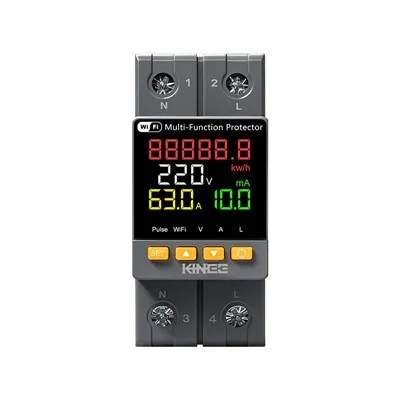
So, there you have it! These are just some of the main motion control techniques in industrial control. Each technique has its own strengths and weaknesses, and the right choice depends on the specific application. If you’re in the market for industrial control solutions and need help figuring out the best motion control technique for your project, don’t hesitate to reach out. We’re here to provide you with the expertise and products to help your industrial processes run smoothly.
Cable Tie References:
- "Motion Control Basics" by Brian Hogg
- "Industrial Automation and Control" textbooks from various publishers
Wenzhou Kinee Electrical Co., Ltd.
We are one of the most professional industrial control manufacturers and suppliers in China, featured by quality products and good price. Please rest assured to buy advanced industrial control made in China here from our factory. We also accept customized orders.
Address: Unit 1, Building 31, Wenzhou Wenbo Science and Technology Industrial Park, No. 706 Yanyun Road, Lingkun Street, Oujiangkou Industrial Cluster Area, Wenzhou, Zhejiang Province
E-mail: sandyma@kinee.net
WebSite: https://www.kinee.net/
