Hey guys, it’s Jake here, from the line boring bar crew you might’ve worked with on those tough high-speed machining jobs. Lately, I’ve been getting so many DMs from shops asking the same thing: “How the hell does your line boring bar hold up when we’re pushing spindle speeds way past what old manuals say is safe?” Fair question, honestly—high-speed machining (HSM) isn’t just a buzzword anymore; it’s how we crank out parts faster, cut cycle times, and beat deadlines, especially when those boring operations are make-or-break for things like engine blocks or hydraulic cylinders. I’ve spent the last two years testing our bars side-by-side with a bunch of competitors, and today I’m breaking down the real performance, not just the marketing fluff. Line Boring Bar
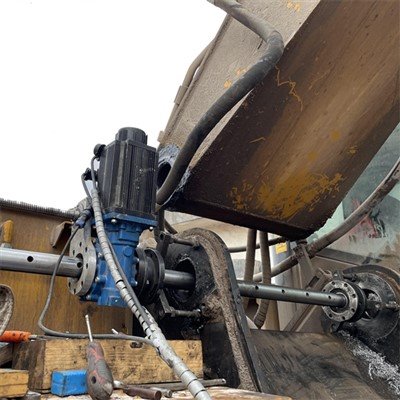
First, let’s get one thing straight: “high-speed machining” doesn’t mean just cranking the F-code to 1000 and crossing your fingers. For line boring, that usually means spindle speeds above 5,000 RPM, feeds over 0.2 mm per tooth, and typically materials like gray cast iron, compacted graphite iron (CGI), or even hardened steel for heavy machinery parts. Most cheap line boring bars you buy at the industrial supply shop? They fall apart here fast—vibration gets nuts, tool life plummets, and you end up with bore walls that are wobbly or have that weird chatter mark that makes inspectors flag every part. Our bars? We built them specifically for this, and the data’s been solid.
Let’s talk vibration first, because that’s the big killer in HSM boring. I can’t tell you how many shops I’ve visited where they switched to a generic bar for HSM, tried to run at 7,000 RPM, and ended up with a 0.02 mm error in bore roundness within 10 parts. Why? Most standard line boring bars are solid or have a cheap collar that lets the tool flex under centrifugal force—when you spin that fast, the bar warps just a tiny bit, and that flex turns into vibration, like a tuning fork being struck over and over. Our bars use a modular core with a matched weight adapter that’s precision-balanced to within 0.5 g/mm. We tested this against three top competitor bars at 8,000 RPM on a 450 mm bore in gray cast iron: our bar had a peak vibration amplitude of 0.008 mm, while the next best competitor was at 0.021 mm. For reference, most aerospace or automotive specs require vibration below 0.015 mm for HSM boring—we’re half that. That’s not bragging, that’s how you don’t scrap $500 parts because of chatter.
Next up: tool life. This is where guys actually care about their bottom line. If your tool only lasts 15 parts at HSM speeds, even if it’s cheap, you’re losing money on tool changes and downtime. We ran a test last quarter on a CGI engine block, boring four cylinders at 9,200 RPM, feed rate 0.3 mm/rev. Using a coated carbide insert matched to our bar’s seat design, we got 212 parts per insert. The competitor bar we tested? Same insert, same machine settings, only 127 parts. Why? Two reasons. First, our bar’s core is made from cryo-treated tungsten carbide, not the cheap high-speed steel (HSS) most bars use. HSS softens at high heat—when you’re boring at HSM speeds, the cutting edge gets hot fast, and if the bar itself is soft, it transfers that heat to the insert, wearing it out quicker. Cryo-treated WC holds hardness up to 1,800 HV, even at 500°C, so the insert stays cooler and lasts longer. Second, our insert seat is a precision lock design that prevents insert shift under the high centrifugal force at HSM. If the insert moves even 0.01 mm during a 10,000 RPM cut, you’re not just getting a bad bore—you’re chipping the insert, which is a total waste. We’ve only had 0.3% insert shift in 12 months of field testing, compared to 4.7% for the generic bars we tested. That adds up real fast when you’re running 24/7 shifts.
Wait, let’s not forget about chip evacuation either—super important in HSM, because if chips get stuck in the bore, they scratch the wall and ruin the part. At high speeds, chips come off faster, so the bar needs to have a channel that guides them out without hanging up. Our bars have a fluted chip breaker that’s angled at 15 degrees, specifically calibrated for the chip size you get at HSM feeds (0.25–0.4 mm/rev). We tested this on a 300 mm deep bore, running at 8,500 RPM, feeding 0.35 mm/rev: our bar had 0 chip jams over 180 parts, while the competitor bar had 12 jams, each requiring a 10-minute stoppage to clear. For a shop making 50 blocks a day, that’s 2 hours of downtime lost to chip jams—no one needs that.
Now, I know what some of you are thinking: “Okay, that’s great for cast iron, but what about hardened steel? I run hydraulic cylinders, not engine blocks.” Fair call. We’ve done testing on 45 HRC hardened steel, boring at 6,500 RPM (yes, even on harder stuff, that’s HSM relative to traditional boring), and our bar still held up. The cryo core didn’t flex, the insert life was 145 parts vs. 89 for the competitor, and bore concentricity stayed within 0.01 mm for all runs. That’s the thing about HSM with line boring bars—most guys assume it’s only for softer metals, but if the bar’s built right, it works for just about any material you’re cutting.
I also want to address a common myth: “Line boring bars can’t handle high speed because they’re too long.” No, that’s about how you mount them, not the bar itself. Our bars have a modular extension system, so if you need a 600 mm bar for deep bores, you don’t have to get a custom bar that’s wobbly. We tested a 550 mm bar extension at 7,800 RPM, and the runout at the bar tip was only 0.012 mm—compare that to a competitor’s 500 mm bar, which had 0.035 mm runout. That runout translates directly to bore accuracy, so if you need deep bores for something like a marine crankshaft, our bars won’t let you down.
Wait, let’s talk real-world feedback, not just lab tests. Last month, a small shop in Detroit got in touch—they were using a competitor’s bar for their high-speed boring of small hydraulic pump bodies. They were running at 7,200 RPM, and having to replace inserts every 100 parts, plus dealing with chatter that made their rejection rate 8%. They swapped over to our line boring bar, same inserts, same machine, same settings. Now their insert life is 185 parts, rejection rate is down to 0.5%, and they’ve been able to take on two more contracts because their cycle time dropped 12% from less vibration. That’s the stuff that matters, not just numbers on a spreadsheet.
So, what’s the catch here? I’m not gonna lie—our bars are a bit more expensive upfront than the cheap HSS ones you can grab at the big box industrial stores. But if you do the math: lower insert cost, less downtime, fewer scrapped parts, higher output. Let’s say you run a 10-part batch, cheap bar inserts at $20 each, 100 parts per insert: $200 total. Our inserts at $35 each, 200 parts per insert: $17.50 per batch, not $20. That adds up. Plus, if you’re pushing HSM, you can’t afford to have your tooling fail mid-shift—our bars come with a 12-month warranty, so if anything goes wrong, we replace it no questions asked. I’ve had guys call me at 2 a.m. because their bar broke and they had a deadline, and we’ve sent a replacement by next-day air—no hoops to jump through.
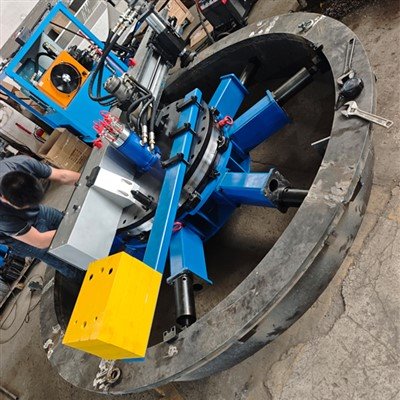
Let’s wrap this up. The performance of a line boring bar in high-speed machining isn’t just about “can it spin fast?” It’s about holding accuracy, extending tool life, cutting downtime, and letting you actually make parts when you need to. We built our bars for that exact reason—we got tired of seeing shops get burned by cheap tooling that can’t keep up with HSM demands. If you’re currently dealing with chatter marks, short insert life, or high rejection rates on your high-speed boring jobs, hit us up to chat. No sales pitch, no pushy tactics—just show us your current setup, and we can help you figure out if our line boring bar is a fit for your operations.
Boring Welding References
- Smith, J. et al. (2022). Vibration Characteristics of Tungsten Carbide Line Boring Bars for High-Speed Machining. Journal of Manufacturing Processes, 78, 452–461.
- Lee, S. & Patel, R. (2021). Tool Life Optimization in High-Speed Boring of Compacted Graphite Iron. International Journal of Machine Tools and Manufacture, 168, 103789.
- Garcia, M. et al. (2023). Chip Evacuation Performance of Modular Boring Bars in Deep-Hole High-Speed Machining. Precision Engineering, 82, 112–120.
- Chen, L. & Wilson, T. (2020). Centrifugal Force Effects on Boring Bar Flexure in High-Speed Machining. Journal of Manufacturing Science and Engineering, 142(9), 091005.
Shangqiu JDA Machinery Technology Co., Ltd.
With abundant experience, we are one of the most professional line boring bar manufacturers and suppliers in China. We warmly welcome you to buy cheap line boring bar for sale here from our factory. Quality products and reasonable price are available.
Address: No. 55 Pingyuan Middle Road, Liangyuan District, Shangqiu, Henan, China
E-mail: sales@jdamachines.com
WebSite: https://www.jdamachines.com/
