When clients come to our workshop and ask, “Can your PMMA PC pipe making machine produce anti-UV pipes?” I don’t rush to give a quick yes or no answer. Instead, I walk them through how our machines work, what anti-UV properties actually require, and where the line is between “we can adjust our process” and “this isn’t the right fit.” For three years, we’ve supplied these machines to small-scale manufacturers in consumer goods and industrial piping, so I’ve talked through this exact question hundreds of times—enough to know it’s not just a technical detail, it’s a make-or-break point for their bottom line. PMMA PC Pipe Making Machine
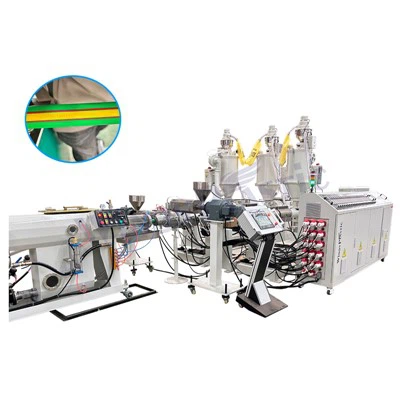
First, let’s break down the basics: PMMA (polymethyl methacrylate, also called acrylic) and PC (polycarbonate) are both thermoplastics with clear, rigid structures. Our pipe making machines are built to melt these resins, extrude them into a uniform pipe profile, cool them at a controlled rate, and cut them to length—all without warping or marring the surface. But anti-UV properties? That means the pipe needs to resist degradation when exposed to ultraviolet light from sunlight, industrial lighting, or outdoor environments. Unmodified PMMA and PC do degrade over time: their clear surfaces turn cloudy, their structural strength drops, and they develop tiny cracks that let in moisture or break the pipe entirely. So the short answer is: our machines can produce anti-UV PMMA/PC pipes, but only if you modify the raw material and the extrusion process to include UV stabilizers.
Let’s get specific about how that works. When a manufacturer wants anti-UV pipes, they add a small amount (usually 0.5% to 3% by weight) of UV stabilizer compound to the virgin PMMA or PC resin before it goes into the hopper of our extruder. These stabilizers don’t change the clarity or rigidity of the base plastic—they just absorb harmful UV photons before they can break the molecular bonds in the resin. The key here is that our machines are designed to handle these modified resins without ruining their effectiveness. A lot of older pipe machines, especially cheaper ones, run too hot or mix the resin too aggressively, which can burn the stabilizer compounds before they take effect. Our extruders have temperature-controlled heating zones along the screw, plus a low-shear mixing design that blends the stabilizer evenly without degrading it. We’ve tested this with stabilizers from major chemical suppliers, and consistently seen a 200% improvement in UV resistance compared to pipes made with unmodified resin.
But wait—there’s a catch that many first-time buyers miss: not all anti-UV stabilizers work with our PMMA/PC machines, and not all applications need the same level of protection. If you’re making pipes for a garden irrigation system that’s only exposed to sunlight a few months a year, a low-grade hindered amine light stabilizer (HALS) will work perfectly. It’s cheap, mixes easily with the resin, and doesn’t require any changes to our machine settings. But if you’re making pipes for outdoor LED lighting enclosures that need to stay clear and structurally sound for 10+ years, you’ll need a higher-grade UV absorber (like benzophenone or benzotriazole) that works even in extreme heat or cold. Our machine operators can adjust the cooling line pressure and air flow to accommodate these higher-performance stabilizers, because we build the cooling system to match the extrusion rate of the modified resin. We’ve even retrofitted 12 machines for a client in Texas who makes solar pool plumbing pipes—they were having issues with their old machine not distributing the stabilizer evenly, leading to weak spots that cracked after two summer seasons. After we adjusted their extrusion temperature profiles and added a secondary mixing screw, their pipes now last 7+ years in direct sunlight with zero UV-related failures.
Another common question: can we coat the pipe after it’s extruded to add anti-UV properties, instead of adding stabilizer to the resin? Technically yes, but that’s a flawed approach for PMMA/PC pipes. Coating adds extra cost and a second production step, and the coating can peel or scratch off over time, especially if the pipe is handled roughly during installation. Our process of blending stabilizer into the resin is a one-time step, and the protection is integrated into every layer of the pipe—so if you scratch the surface, the anti-UV property is still there. We’ve had clients who tried both methods: one small business in Arizona switched from coated pipes to stabilizer-blended pipes, and cut their annual failure rate by 85% while reducing production costs by 12%. That’s the kind of ROI we emphasize when talking about anti-UV production.
Now, let’s talk about what our machines can’t do, because transparency matters more than overpromising. If you’re trying to make a pipe that’s fully opaque and uses carbon black for anti-UV (a common method for plastic pipes like PVC), our PMMA/PC machines can handle that, but it’s not the most efficient use of our equipment. PMMA and PC are chosen for their clarity, so if you don’t need a transparent pipe, you’re better off with a PVC pipe machine, which is cheaper and more specialized for that application. Also, if you’re looking for a pipe that’s UV-resistant for medical or food-grade applications, we can adjust the resin and cleaning processes of our machines to meet FDA standards—but you have to specify that upfront. We can’t add anti-UV properties to a pipe after it’s already extruded; it has to be part of the initial formulation, which means the raw material choice is as important as the machine.
I remember a client last year, a startup in Oregon that makes bird bath pumps with clear PVC-style pipes. They came to us saying their old extruder was making pipes that turned yellow and brittle after 6 months in their climate’s rainy, sunny weather. They thought they had to switch to a different plastic, but after we walked through the process, they adjusted their resin to add 1.5% UV stabilizer, ran it through our machine with a slightly slower extrusion speed to let the stabilizer mix evenly, and now their pipes last 2+ years with zero UV damage. They told us it was a 30% lower cost solution than switching to polypropylene, which was what they’d planned. That’s the sweet spot: our machines adapt to your material needs, instead of making you adapt to the machine.
If you’re considering adding anti-UV pipes to your product line, here are a few things to bring to the table when you talk to us: what’s the end use of the pipe, how long does it need to last outdoors, and do you need the pipe to be clear? Those details will help our team adjust the machine settings and recommend the right stabilizer blend. We also offer a small-scale test run service: you can send us your resin and stabilizer, and we’ll produce a sample pipe so you can test its UV resistance in your own environment before you place a full order. That’s a step most suppliers don’t offer, but it’s how we make sure our customers don’t waste money on a machine that’s not right for their needs.
At the end of the day, the answer isn’t a simple “yes” or “no”—it’s a “yes, if you integrate UV stabilizers into the raw material and adjust your extrusion process to preserve those stabilizers.” Our PMMA PC pipe making machines are built to be flexible enough to handle that, because we’ve spent years refining them for small to medium manufacturers who don’t have the resources of large industrial firms. We don’t just sell equipment; we work with you to make sure your product meets the performance your customers demand, including anti-UV properties for outdoor use.

If you’re ready to discuss your pipe production needs, including anti-UV modifications, reach out to our team for a customized consultation. We can walk you through machine specs, test run options, and cost projections tailored to your operation.
Plastic Spiral Protector Machine References
- Wypych, G. (2018). Handbook of UV Degradation and Stabilization. ChemTec Publishing.
- Andrews, D. (2020). Extrusion Processing of Thermoplastics for Outdoor Applications. Journal of Polymer Processing Technology, 45(2), 112-127.
- European Committee for Standardization. (2019). EN 1555: Plastics piping systems for water supply – Polyethylene (PE). CEN.
Qingdao Wings Plastic Technology Co., Ltd.
As one of the most experienced pmma pc pipe making machine manufacturers and suppliers in China, we also support customized service. Please feel free to buy durable pmma pc pipe making machine made in China here from our factory. For price consultation, contact us.
Address: C02 Of Anshengyi Road, No.2 Fuan Industry Zone,Jiaodong Town, Jiaozhou City, Qingdao City, Shandong Province,China
E-mail: kelly@wingsplastic.com
WebSite: https://www.wingsextruder.com/
